
Circle Talks
In Genç Pusula's Circle Talks we talk using the Circle Method: no one interrupts anyone, there's no right or wrong, everyone speaks in turn. We make these broadcasts to show young people they're not alone and to learn again how to listen to one another.
We talk using the Circle Method
The Circle Method is a conversation method in which a community talks around a single topic, in turn, each person building on the others. The aim isn't to win the argument; everyone leaves their own thought in the middle of the circle, and the conclusion is reached through collective wisdom.
The method has three rules, and we go over them again at the start of every episode.
-
No one interrupts anyone
While one person speaks, the others only listen.
-
There's no right or wrong
No one tries to win the argument.
-
Everyone speaks in turn
The word goes around the circle and reaches everyone.
What is the Circle Method good for?
It enables many-sided thinking; problems are solved by talking, not by fighting. Because the rules apply to everyone, no one holds back thinking "what will people think of me," and people express themselves freely. And because everyone listens to someone else, a bond forms in the circle.
How do you practice the Circle Method?
A single question is chosen and everyone speaks in turn; we go in alphabetical order. The same question goes around more than once, and each speaker builds on the one before. The conversation closes with a short round of impressions.
Who can practice the Circle Method?
Anyone willing to keep its rules: in a family, at school, at work, in a neighborhood. It can't be done alone; it takes a community, and that community has to accept the rules together.
What if you can't do it the first time?
The circle is something you learn. Someone who tries sincerely becomes able to do it as they get used to listening to others and silencing their own thoughts for a while.
All the answers here come from episode 5: we talked about the Circle Method from start to finish while practicing the method itself. In the words of one participant, "everyone brings half a penny, and in the middle it becomes a wonderful feast."
Read the Circle Method guideEpisodes
So far we've held 8 circles. Each episode is a single question: read it, watch it, go through them in order.
The Illusion of Self
How real is the thing we call "I"? 20 min read · 37 min talkRead the episode
How Should Human Relationships Be?
Relationships should be aimed not at rising above one another but at cooperation and connection. 16 min read · 26 min talk
Why Should We Know Ourselves?
Knowing yourself means first facing the unpleasant side of human nature. 19 min read · 29 min talk
What Is the Circle Method and How Is It Practiced?
The topic is the circle itself: what the method is, what it's good for and who can practice it. A guide and the full transcript. 12 min read · 18 min talk
Why Does Happiness Lie in Human Connection?
From environment, discipline and anxiety to the idea that lasting happiness lies in the bond between people. 18 min read · 32 min talk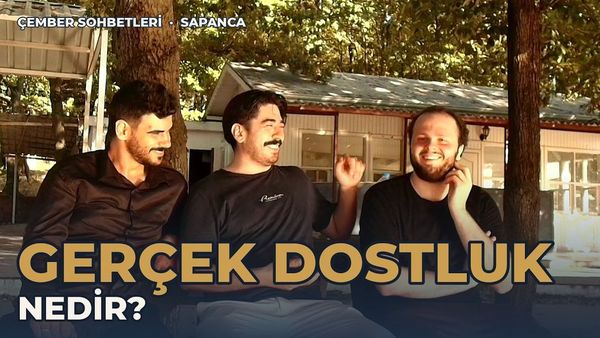
What Is True Friendship?
Four minutes from the Sapanca circle: a one-sentence rule, forgetting yourself, and your friend's desire. 2 min read · 4 min talk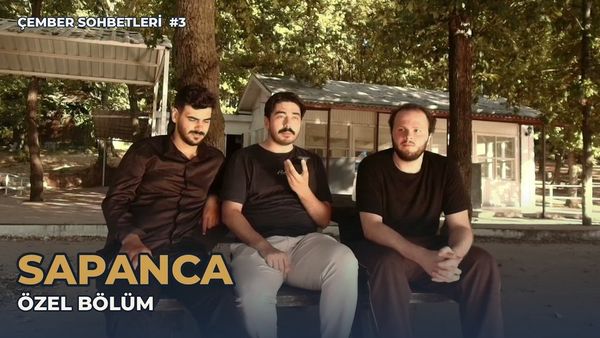
Sapanca Special Episode
Out of the studio, by Lake Sapanca: disconnection from nature, true friendship and why we make these broadcasts. 17 min read · 21 min talk
School Attack, War and Migration: Where Is the Problem?
Three events from the news, one question: is the problem the system, or people? 3 min read · 38 min talk
Why Aren't Young People in Türkiye Happy?
Why are young people unhappy, how do we reach real happiness, and what is decisive in lasting happiness? 13 min read · 23 min talkWhy do we make these broadcasts?
To show young people they're not alone and to learn again how to listen to one another. We believe lasting happiness lies in the bond between people; in every episode we try to build that bond by talking.
What's the question in the next circle?
Live broadcasts are on YouTube and Kick, in Turkish. Pull up a chair and join in the listening.